
 Save
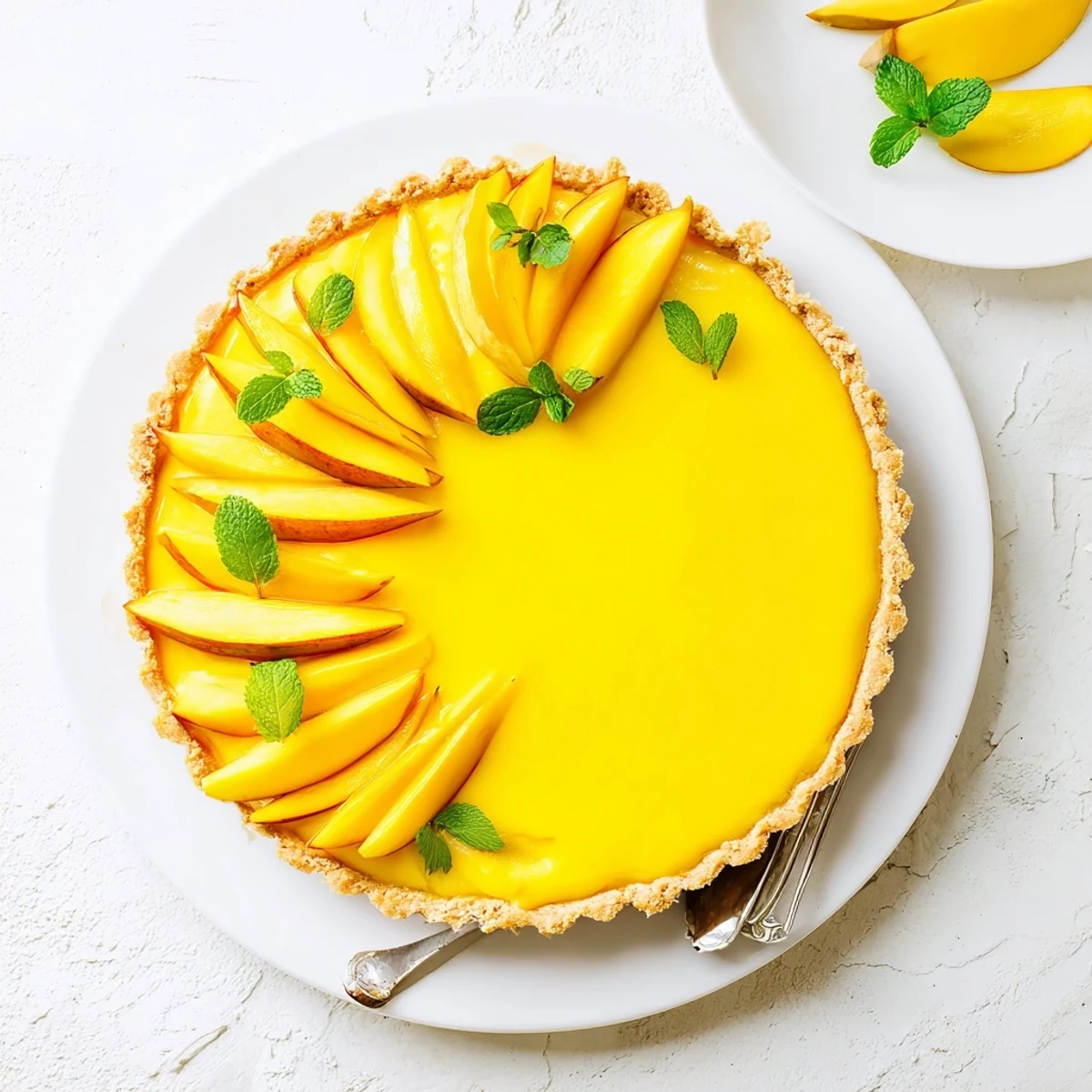
Save This elegant mango curd tart combines a crisp, buttery pastry shell with a silky smooth mango filling that balances sweetness and brightness from fresh lime juice. The curd gets its luxurious texture from careful tempering of eggs and butter, while the crust provides the perfect buttery foundation. The vibrant yellow hue makes it visually stunning for summer entertaining.
Preparing the curd requires patience and constant stirring over gentle heat to achieve that velvety consistency without scrambling the eggs. The result is a luscious, tropical filling that pairs beautifully with the tender, golden crust. Chilling time is essential for the curd to set properly, making this an ideal make-ahead dessert for dinner parties or special occasions.
The first time I made mango curd tart, it was an accident born from an overripe mango situation on my counter. I'd planned to make mango sticky rice, but the humidity had other ideas for the rice. The curd came together so beautifully that evening, with its sunset color and tangy brightness, that it became my go-to summer dessert for years to come.
I once served this tart at a Fourth of July barbecue when the temperature hit 94 degrees. Everyone was wilting, and I was worried about whether a custard-style dessert would even get touched. But something about that cool, refreshing mango flavor brought people back to life. We ate it on paper plates with plastic forks, and it was still one of the best parties I've ever hosted.
Ingredients
- All-purpose flour: Cold flour helps keep the butter from melting too quickly while you work, which is the secret to a flaky crust.
- Unsalted butter, cold and cubed: The temperature matters here—if butter starts melting before it hits the oven, you lose those tender layers that make a tart shell worth eating.
- Powdered sugar: Dissolves more easily than granulated sugar in the dough, giving you a more uniform texture without those occasional grainy surprises.
- Fine sea salt: A little salt cuts through all that sweetness and makes the mango flavor sing instead of just being sweet.
- Egg yolk: Adds richness and helps bind the dough together without making it tough the way whole eggs sometimes can.
- Ice-cold water: Keep a glass of ice water next to you while you work and measure from there every time.
- Fresh mango puree: Frozen mango puree can work in a pinch, but fresh mango gives you this bright, floral note that you just cannot fake.
- Granulated sugar: Mangoes vary wildly in sweetness, so trust your taste buds—if the mango is especially sweet, you might dial this back slightly.
- Eggs and egg yolks: The extra yolks give the curd that luxurious, velvety texture that separates restaurant desserts from home attempts.
- Freshly squeezed lime juice: Bottled juice has a weird aftertaste that becomes painfully obvious in something as delicate as curd.
- Unsalted butter, cubed: Whisking butter into hot curd at the end is what gives it that glossy, spoon-coating finish.
Instructions
- Prepare the crust foundation:
- In a food processor, pulse flour, powdered sugar, and salt until combined. Add cold butter and pulse until the mixture resembles coarse crumbs with some pea-sized pieces remaining—those bigger pieces create flakiness. Add egg yolk and ice water, pulsing just until the dough starts to come together in clumps.
- Chill the dough:
- Turn the dough onto a lightly floured surface and gently press it into a disk. Wrap in plastic and refrigerate for at least 30 minutes—this relaxes the gluten and firms up the butter, which keeps the crust from shrinking in the oven.
- Prepare the tart shell:
- Preheat oven to 350°F (175°C). Roll the dough to about 1/8-inch thickness and carefully transfer it to a 9-inch tart pan, pressing it gently into the corners. Trim any excess overhang, then prick the base all over with a fork to prevent bubbling.
- Blind bake the crust:
- Line the crust with parchment paper and fill with baking weights or dried beans. Bake for 15 minutes, then carefully remove the weights and paper. Return to the oven for 10–12 minutes until the crust is golden brown and completely dry. Let it cool completely before filling.
- Cook the mango curd:
- In a medium saucepan, whisk together mango puree, sugar, eggs, egg yolks, and lime juice until completely smooth. Cook over medium-low heat, stirring constantly with a heatproof spatula and scraping every corner of the pan, until the curd thickens enough to coat the back of a spoon, about 8–10 minutes.
- Finish the curd:
- Remove from heat immediately and whisk in the cubed butter, one piece at a time, until each addition disappears and the curd becomes glossy and emulsified. Strain through a fine-mesh sieve into a clean bowl to catch any bits of cooked egg.
- Assemble and set:
- Let the curd cool for about 10 minutes, then pour it into the completely cooled tart shell. Gently tap the pan on the counter to release any air bubbles, then smooth the top with an offset spatula. Refrigerate for at least 1 hour, or until the curd is completely set and firm to the touch.
- Add finishing touches:
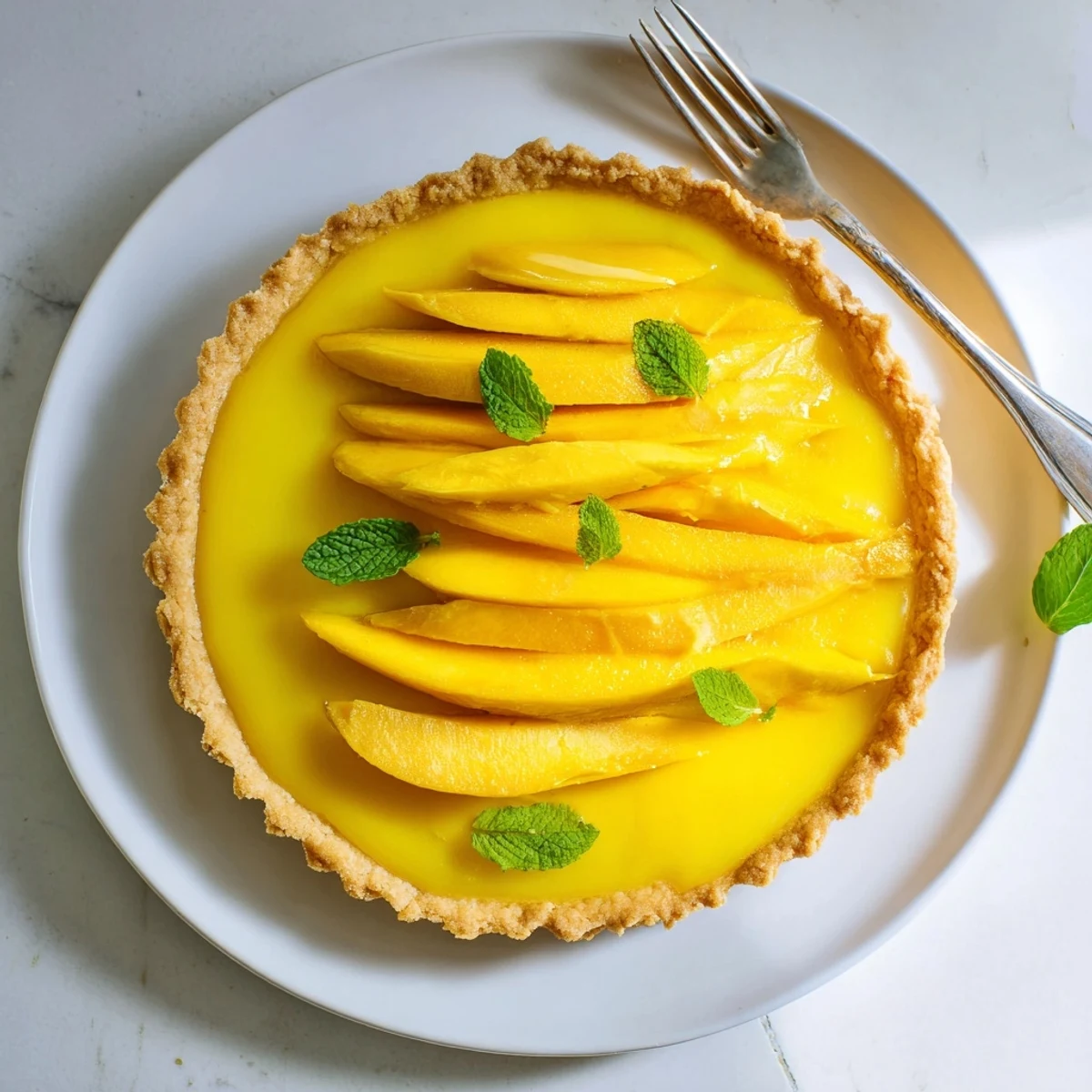
- Garnish with thin slices of fresh mango fanned across the top, or tuck some mint leaves and edible flowers around the edges for something that looks like it came from a bakery window.
 Save
Save My mother-in-law still talks about the mango tart I made for her birthday three years ago. She's not usually one for desserts, but she kept cutting tiny slivers throughout the evening until she'd probably eaten three servings. Sometimes the best recipes are the ones that surprise people.
Making It Your Own
The lime juice in this recipe is there to brighten the mango flavor, but lemon works just as well if that's what you have. I've also swapped in passion fruit juice half-and-half with the mango for something that tastes like a tropical vacation in tart form. Just keep the total juice amount the same and your curd will set up beautifully.
The Make-Ahead Secret
This tart actually improves after a night in the refrigerator. The flavors meld together and the curd firms up into this impossibly smooth slice that holds its shape perfectly. Make it the day before and you'll look like a kitchen wizard with zero stress on serving day.
Serving Strategies
A chilled tart is harder to slice cleanly, so let it sit at room temperature for about 10 minutes before cutting. Run your knife under hot water and wipe it dry between slices for those perfect restaurant-style wedges. Serve with barely sweetened whipped cream if you want something to cut through the richness.
- Dip your knife in hot water between slices for cleaner edges.
- Room temperature tart has better flavor texture than straight-from-the-fridge cold.
- Whipped cream flavored with lime zest is a next-level accompaniment.
 Save
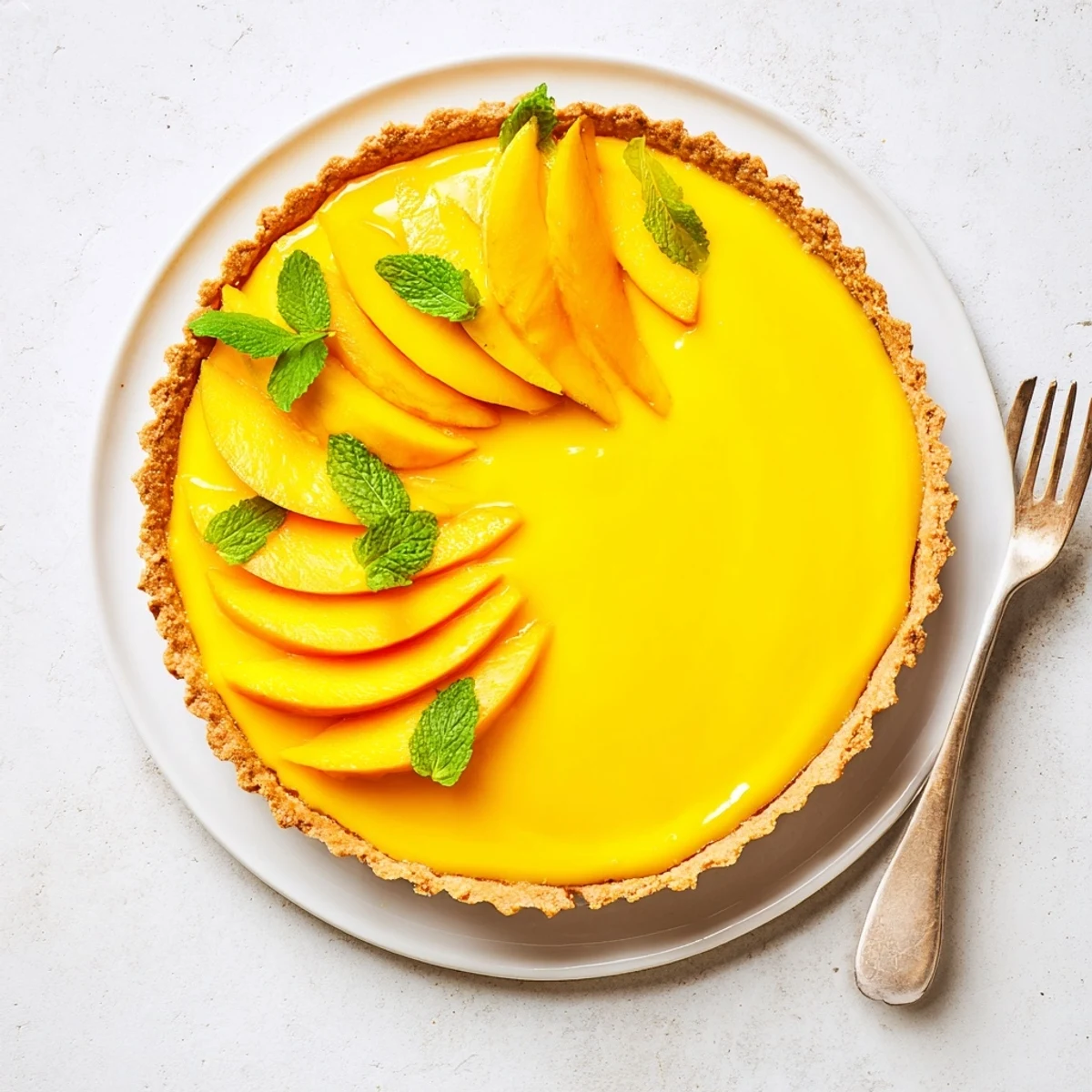
Save There is something deeply satisfying about slicing into a tart and seeing that perfect cross-section of golden crust and sunset-colored filling. I hope this recipe finds its way into your summer rotation, and into the memories of the people you share it with.
Recipe FAQs
- → Can I use frozen mango puree instead of fresh?
-
Yes, frozen mango puree works perfectly in this tart. Thaw it completely and use it as you would fresh puree. The flavor will remain vibrant and the texture consistent.
- → How far in advance can I make this tart?
-
The mango curd can be prepared up to 2 days ahead and stored in the refrigerator. The assembled tart keeps well for 1 day, though the crust may soften slightly over time.
- → What can I use instead of baking weights?
-
Dried beans, rice, or even pennies work effectively as pie weights. These prevent the crust from puffing up or shrinking during the initial baking phase.
- → Why is my mango curd not thickening?
-
Continue cooking over low heat, stirring constantly. The curd thickens as it reaches 170°F (77°C). If it still seems thin after 10 minutes, it will firm up considerably during chilling.
- → Can I make this dessert gluten-free?
-
Substitute the all-purpose flour with a 1:1 gluten-free flour blend in the crust. The texture will remain remarkably similar, and the mango curd is naturally gluten-free.
- → How do I know when the curd is done cooking?
-
The curd is ready when it coats the back of a spoon and leaves a clear trail when you run your finger through it. It should resemble the consistency of warm pudding.