
 Save
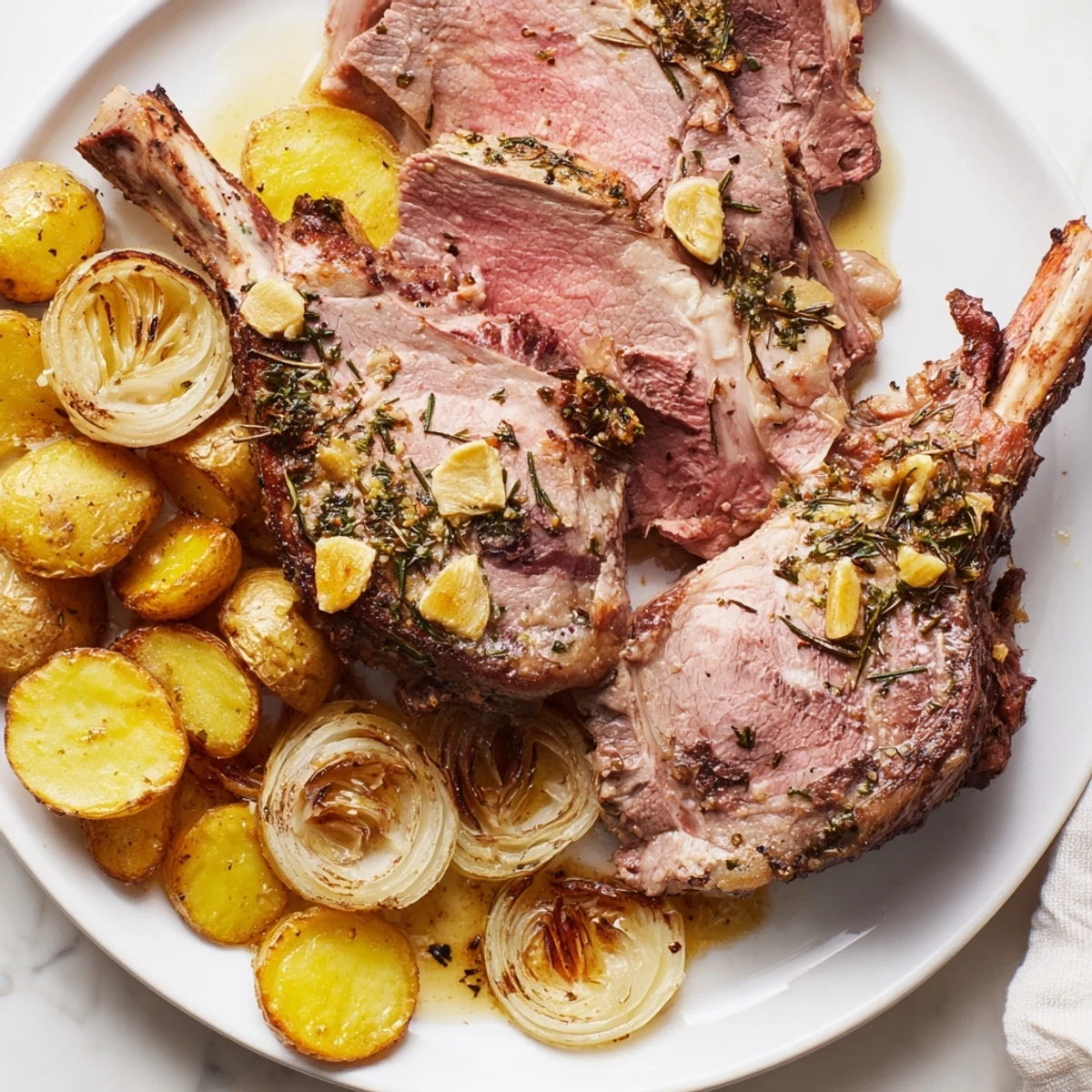
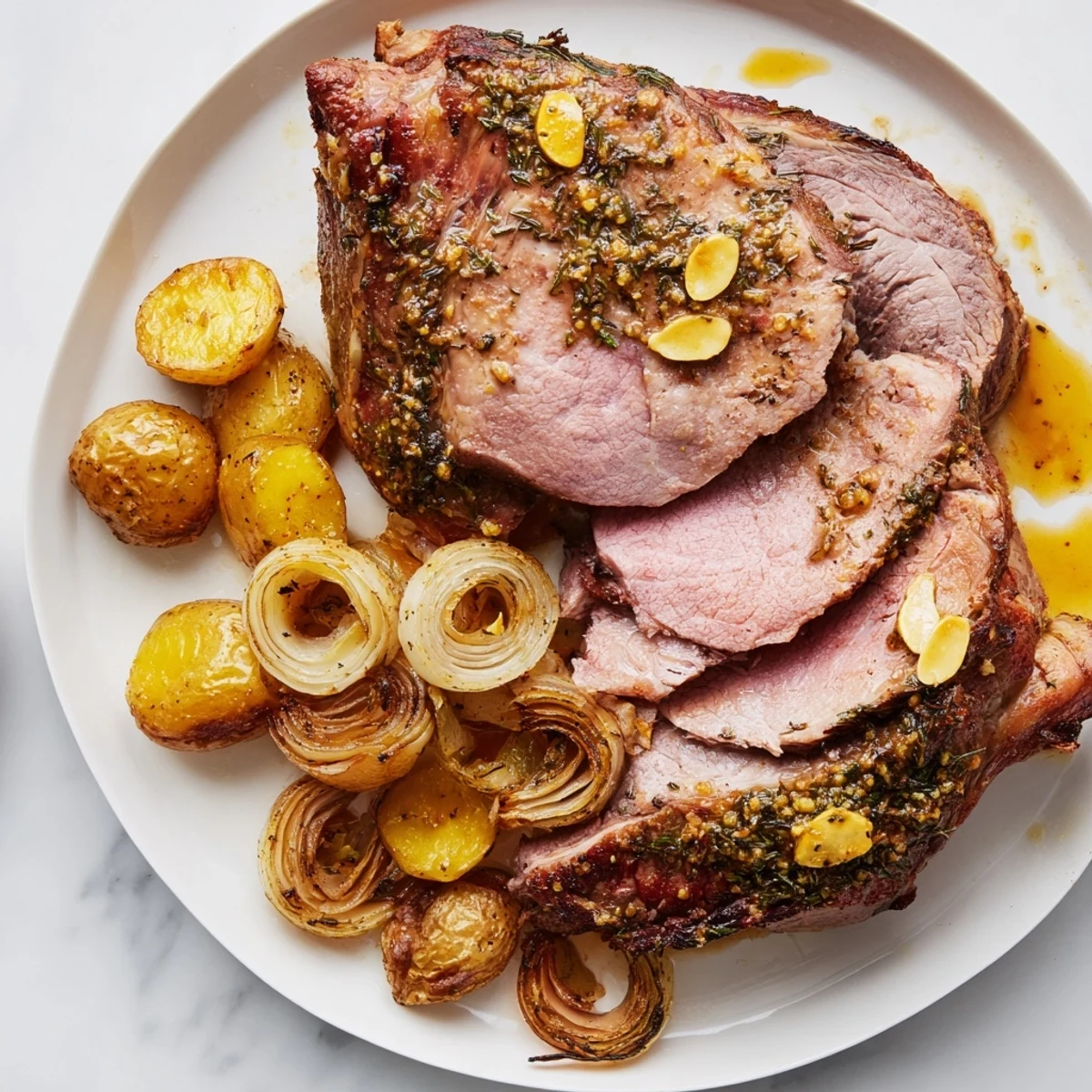
Save This dish highlights a bone-in leg of lamb, skillfully infused with garlic slices and a herb marinade featuring rosemary, thyme, and Dijon mustard. The leg is roasted atop a bed of baby potatoes and onions, all coated in olive oil and seasoned with sea salt and pepper. Roasting at 200°C ensures tender, juicy meat and crispy, golden vegetables. Resting the lamb post-roast enhances its succulence, making it an impressive centerpiece for gatherings.
The way my grandmother's kitchen would fill with that unmistakable roasting garlic and rosemary scent still brings me back to Sunday evenings when the entire extended family would gather around her table. This leg of lamb wasn't just dinner—it was an event, something we'd all hover around as she carved, everyone secretly hoping for the crispy end piece.
Last Easter I decided to recreate this for friends who'd never had lamb before, watching their faces light up with that first taste of tender, herb-crusted meat. The pan juices are basically liquid gold—don't even think about washing that roasting pan without spooning every drop over your potatoes first.
Ingredients
- 1 bone-in leg of lamb (about 2 kg / 4.5 lbs), trimmed: Bone-in adds incredible depth to the pan juices and helps the meat cook more evenly, plus it makes for a dramatic presentation at the table
- 4 cloves garlic, sliced: Tucking these into little slits all over the lamb means garlicky flavor in every bite, not just on the crust
- 2 tablespoons fresh rosemary, chopped: Fresh rosemary's piney, resinous flavor is what makes this feel like a proper Sunday roast—dried herbs won't give you that same aromatic punch
- 2 tablespoons fresh thyme, chopped: Thyme bridges the gap between the earthy rosemary and bright lemon, adding subtle floral notes
- 1 tablespoon Dijon mustard: This acts as the glue that helps all those herbs and aromatics cling to the meat while it roasts
- 3 tablespoons olive oil: You need enough oil to carry the herb mixture and help the exterior develop that gorgeous browned crust
- 2 teaspoons coarse sea salt: Coarse salt gives you little bursts of salinity against the rich meat—fine salt just disappears into the rub
- 1 teaspoon freshly ground black pepper: Freshly cracked pepper has a heat and complexity that pre-ground lost weeks ago
- 1.5 kg (3.3 lbs) baby potatoes, halved or quartered: Baby potatoes have thinner skins and creamier flesh than larger varieties, plus they roast more evenly
- 1 large yellow onion, thickly sliced: These onions collapse into sweet, jammy layers that practically dissolve into the pan juices
- 100 ml (1/3 cup + 1 tbsp) dry white wine or chicken broth: This creates steam in the pan and deglazes all those flavorful browned bits from the bottom
- Zest of 1 lemon: Lemon zest cuts through the richness of the lamb without making anything taste acidic or sour
Instructions
- Get your oven ready:
- Preheat to 200°C (400°F)—you want it fully hot so the lamb sears immediately when it hits the pan
- Prep the lamb:
- Using your sharpest knife, make small slits all over the lamb and tuck garlic slices inside each one
- Make the herb rub:
- Mix rosemary, thyme, Dijon mustard, olive oil, salt, pepper, and lemon zest in a small bowl until it forms a paste
- Season the meat:
- Rub this mixture thoroughly all over the lamb, pressing it into every nook and cranny
- Arrange the vegetables:
- Scatter onion slices across the bottom of your roasting pan, then arrange potatoes around them with a tablespoon of oil, salt, and pepper
- Assemble everything:
- Place the seasoned lamb directly on top of the onions and potatoes, then pour in your wine or broth
- Roast to perfection:
- Cook for about 1 hour 30 minutes, basting the lamb with pan juices once or twice and giving the potatoes a toss after 45 minutes so they brown evenly
- Check doneness:
- Insert your meat thermometer—you're looking for 54–57°C (130–135°F) for medium-rare, adding more time if needed
- Rest before carving:
- Tent the lamb loosely with foil and let it rest for at least 15 minutes so the juices redistribute throughout the meat
- Serve it up:
- Carve thick slices and arrange them alongside those crispy potatoes, spooning plenty of pan juices over everything
 Save
Save There's something deeply satisfying about placing a whole roasted leg of lamb on the table and watching everyone's eyes widen. This is the kind of meal that turns a random Tuesday into something worth celebrating.
Make It Ahead
You can rub the lamb with the herb mixture up to 24 hours in advance—just wrap it tightly and let it marinate in the refrigerator. This actually makes the flavors even more intense, though you'll want to let it come to room temperature for about an hour before roasting.
Getting The Right Doneness
Lamb continues cooking as it rests, so pull it from the oven when your thermometer reads about 3–4 degrees below your target temperature. If you prefer it more toward medium, aim for 60°C (140°F) in the oven, knowing it'll climb slightly during that crucial resting period.
Side Suggestions
A bright, acidic salad cuts beautifully through the rich lamb—think arugula with shaved Parmesan and a lemon vinaigrette. If you want more vegetables, roasted asparagus or sautéed green beans with almonds both work wonderfully.
- Pair with a bold red wine like Bordeaux or Syrah to stand up to the lamb's robust flavor
- Leftover lamb makes incredible sandwiches the next day—thinly sliced with some horseradish mayonnaise
- Freeze any leftover pan juices in ice cube trays to add instant flavor to future soups or stews
 Save
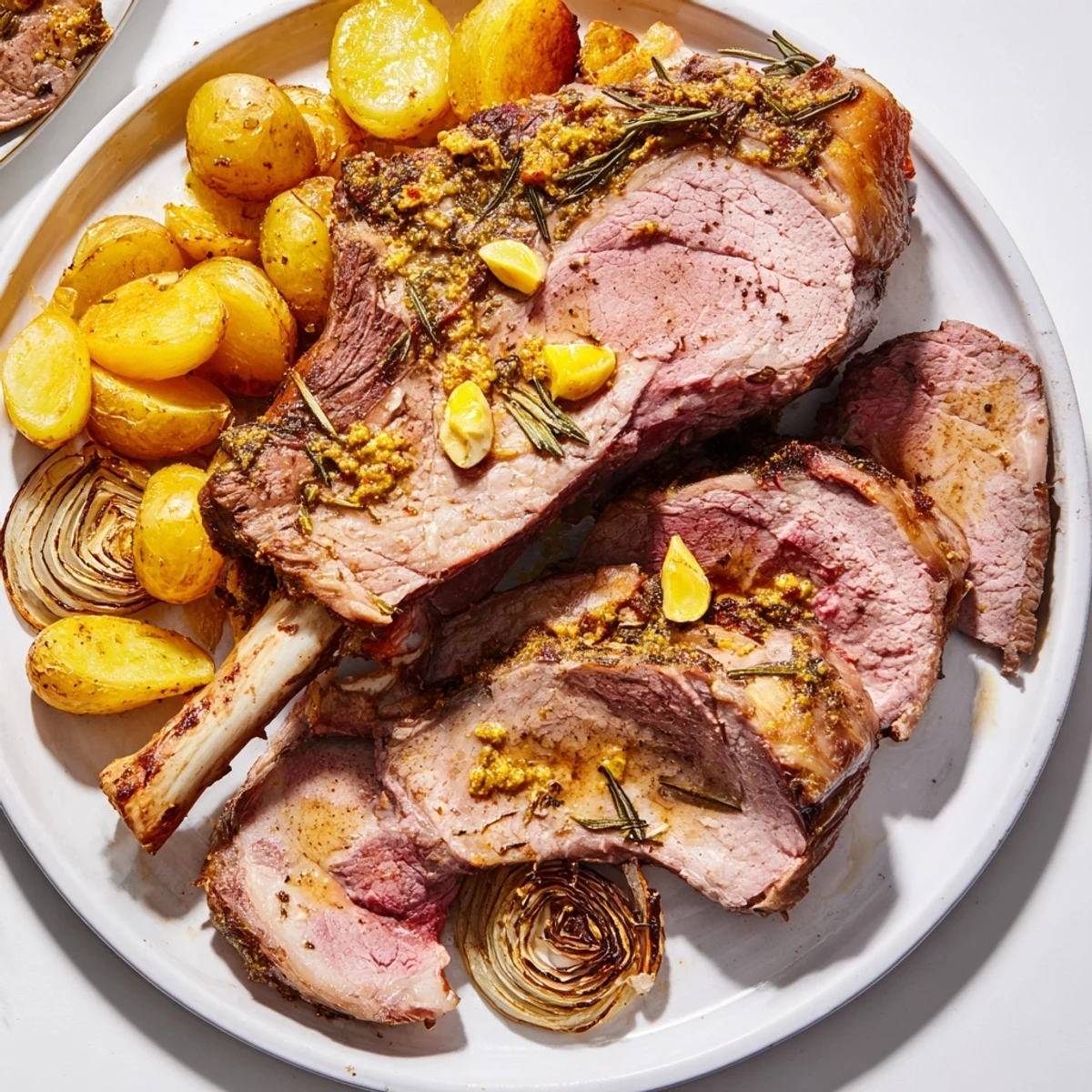
Save A perfectly roasted leg of lamb is one of those dishes that makes you feel like you've truly mastered something in the kitchen. Gather your favorite people and pour the wine.
Recipe FAQs
- → How long should the leg be roasted?
-
Roast the leg for 1 hour 30 minutes at 200°C, basting once or twice, until medium-rare at 54–57°C internal temperature.
- → Can the potatoes be stirred during roasting?
-
Yes, gently toss the potatoes after 45 minutes to ensure even roasting and crispiness.
- → What herbs enhance the flavor best?
-
Fresh rosemary and thyme combined with garlic and Dijon mustard create a rich and aromatic marinade.
- → Is it necessary to rest the lamb after cooking?
-
Rest the lamb loosely covered for 15 minutes to let juices redistribute, ensuring moist, tender slices.
- → What can be used instead of white wine in the pan?
-
Dry white wine or chicken broth can be poured into the roasting pan to add moisture and flavor during cooking.