
 Save
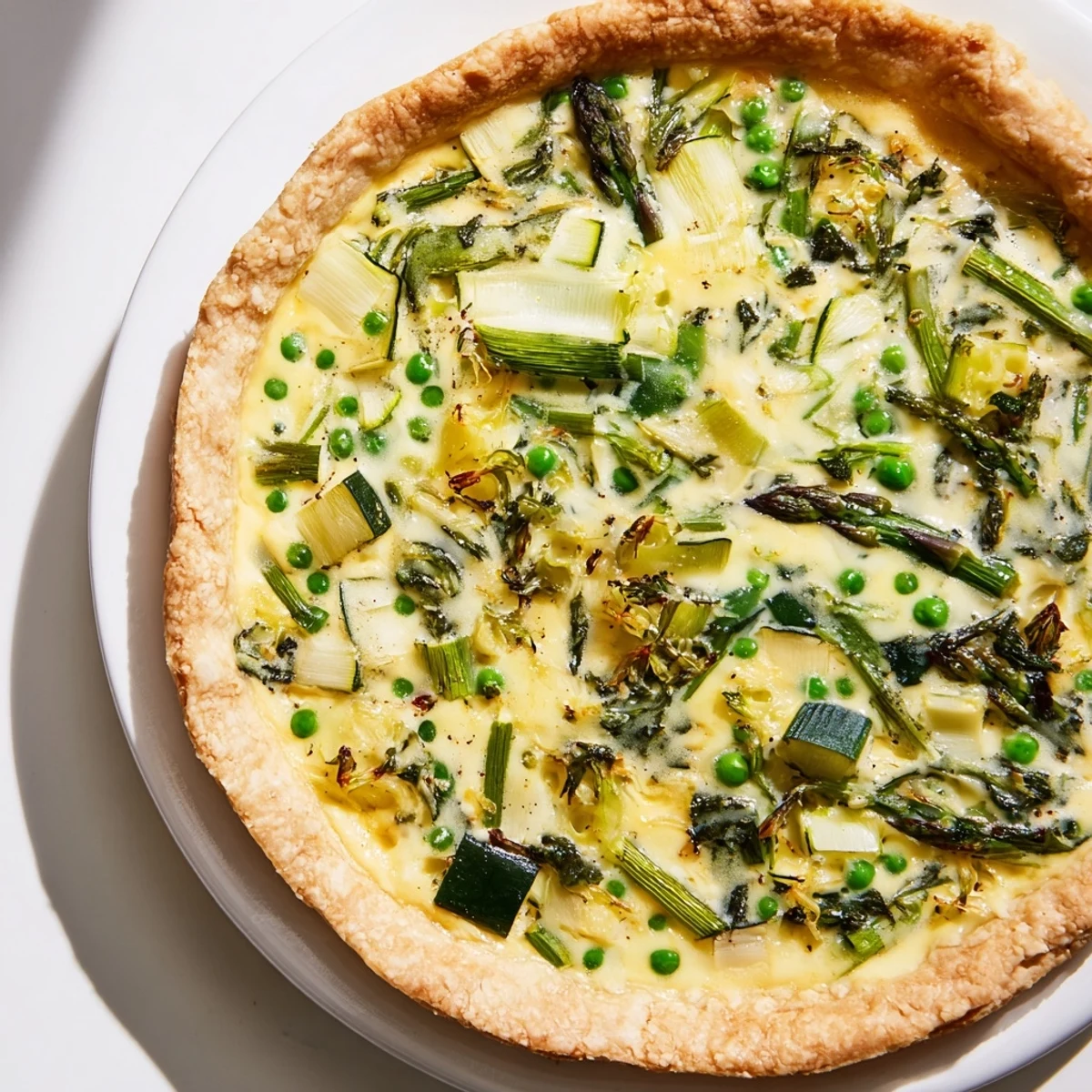
Save This delightful quiche highlights the fresh flavors of spring vegetables like asparagus, zucchini, spinach, and peas. The crust, made from all-purpose flour and cold butter, is rolled thin and blind-baked for a crisp base. Tender sautéed vegetables are combined with a creamy custard infused with Gruyère cheese, then baked until golden. Perfect for brunch or a light lunch, this dish brings a harmonious balance of textures and flavors that celebrate seasonal produce.
The windows were thrown open to catch the first warm breeze of April, carrying the scent of blooming jasmine through the kitchen. I'd spent months in winter hibernation mode, baking heavy breads and simmering stews, but something about that morning sunlight had me craving something lighter. The farmers market had just reopened for the season, and I came home with arms full of tender asparagus, bright green peas, and zucchini so small they still had their blossoms attached. That afternoon became my annual spring awakening ritual, a vegetable quiche that somehow makes everything feel possible again.
My sister came over unexpectedly that day, trailing three kids and a story about her car breaking down near the market. We ended up eating the quiche warm from the oven while sitting on the back steps, the children barely noticing they were eating vegetables between excited chatter about the neighborhood ducks. She asked for the recipe before she even finished her second slice, and now it's become her go-to for those nights when she needs to feed a crowd without spending hours in the kitchen.
Ingredients
- All purpose flour: The foundation of a tender, flaky crust that bakes up golden and holds together beautifully when sliced
- Cold unsalted butter: Keeping it ice cold is what creates those magical flaky layers in your pastry
- Ice water: Add it one tablespoon at a time until the dough just comes together, overworking makes it tough
- Asparagus: Choose thin, tender stalks that snap cleanly when bent, thick ones can be woody and fibrous
- Zucchini: Small, young ones have better flavor and texture, plus they hold their shape during baking
- Baby spinach: It wilts down beautifully and adds lovely color without overwhelming the delicate custard
- Spring onions: Their mild sweetness bridges the gap between the vegetables and the rich egg filling
- Fresh peas: They add bursts of sweetness that pop against the savory elements, frozen work in a pinch
- Heavy cream and whole milk: This combination creates the perfect richness without becoming overwhelmingly dense
- Nutmeg: Just enough to add warmth and depth without announcing itself, it makes the custard taste professional
- Gruyère cheese: Its nutty, slightly funky flavor pairs perfectly with spring vegetables, Swiss is a good alternative
Instructions
- Preheat your oven and prepare the crust:
- Mix flour and salt in a bowl, then work in cold butter until the mixture looks like coarse crumbs with some pea sized pieces remaining. Add ice water gradually, mixing until the dough holds together when squeezed. Shape into a disk, wrap tightly, and let it chill in the refrigerator for at least 20 minutes.
- Roll and partially bake the crust:
- Roll the dough on a lightly floured surface until it's large enough to fit your tart pan with some overhang. Press it gently into the pan, trim the edges, and prick the bottom all over with a fork. Line with parchment paper and fill with pie weights or dry beans, then bake for 15 minutes at 375°F. Remove the weights and parchment, then bake for 5 more minutes until the bottom is set and beginning to color.
- Prepare the spring vegetables:
- Warm olive oil in a skillet over medium heat, then add asparagus and zucchini pieces. Cook for about 4 minutes until they're just beginning to soften, then toss in spinach, spring onions, and peas. Continue cooking for another minute or two until spinach wilts. Remove from heat and let the mixture cool slightly while you make the custard.
- Whisk up the custard filling:
- Crack eggs into a bowl and whisk them together with cream, milk, salt, pepper, and nutmeg until completely smooth and slightly frothy. Stir in about half of your grated cheese so it melts into the warm custard mixture, which helps distribute the cheesy flavor throughout.
- Assemble and bake your quiche:
- Spread the cooled vegetables evenly across your partially baked crust. Pour the egg mixture over them, letting it settle into all the nooks and crannies. Sprinkle the remaining cheese across the top. Bake for 30 to 35 minutes until the filling is completely set and the top is golden brown. Let it cool for 10 minutes before slicing, which gives it time to firm up slightly.
 Save
Save Last spring my neighbor brought over the first strawberries from her garden as a trade for a slice of this quiche. We sat on her porch eating both, and she told me about growing up in France where her grandmother made quiche every Monday with whatever vegetables were left from Sunday's market. Now whenever I make it, I think about those quiet traditions passed down through generations, how food carries memories we didn't even know we were making.
Make It Your Own
The beauty of quiche lies in its adaptability to whatever the season brings. In summer, swap in tomatoes and fresh basil, or try roasted peppers and thyme. Fall welcomes mushrooms and kale, while winter calls for hearty leeks and roasted squash. The proportions stay roughly the same, about three cups of vegetables and one cup of cheese per standard tart pan.
Serving Suggestions
This quiche is equally wonderful served warm for brunch or at room temperature for a picnic lunch. I love pairing it with a bright arugula salad dressed in lemon vinaigrette, which cuts through the richness of the custard. A glass of crisp white wine like Sauvignon Blanc or a light red like Pinot Noir complements the vegetables beautifully.
Make Ahead And Storage
You can prepare the crust dough up to two days ahead and keep it wrapped in the refrigerator, or freeze it for up to a month. The fully baked quiche keeps well in the refrigerator for 3 to 4 days and reheats beautifully in a low oven. Individual slices can be wrapped and frozen, then reheated directly from frozen for quick weekday breakfasts.
- Let the quiche cool completely before wrapping for storage to prevent condensation from making the crust soggy
- Reheat refrigerated quiche at 300°F for about 15 minutes to refresh the crust without drying out the custard
- Frozen slices reheat best when thawed overnight in the refrigerator, then warmed gently in the oven
 Save
Save Every time I pull a golden quiche from the oven, I'm reminded of why I fell in love with cooking in the first place. Something so simple, so nourishing, capable of bringing people together around the table. That's the real magic.
Recipe FAQs
- → How do you make the crust flaky?
-
Use cold unsalted butter cut into flour until coarse crumbs form, then add ice water gradually to create a tender, flaky crust.
- → Can I substitute the spring vegetables?
-
Yes, seasonal vegetables like leeks, bell peppers, or mushrooms can be used to customize flavor and texture.
- → What cheese works best for the filling?
-
Gruyère or Swiss cheese melts smoothly and adds a rich, nutty flavor—combining with goat cheese enhances complexity.
- → How to avoid a soggy crust?
-
Blind bake the crust with parchment and pie weights before adding filling to keep it crisp and prevent sogginess.
- → What is the ideal baking temperature and time?
-
Bake at 375°F (190°C) for 30–35 minutes until the custard is set and top achieves a golden hue.