
 Save
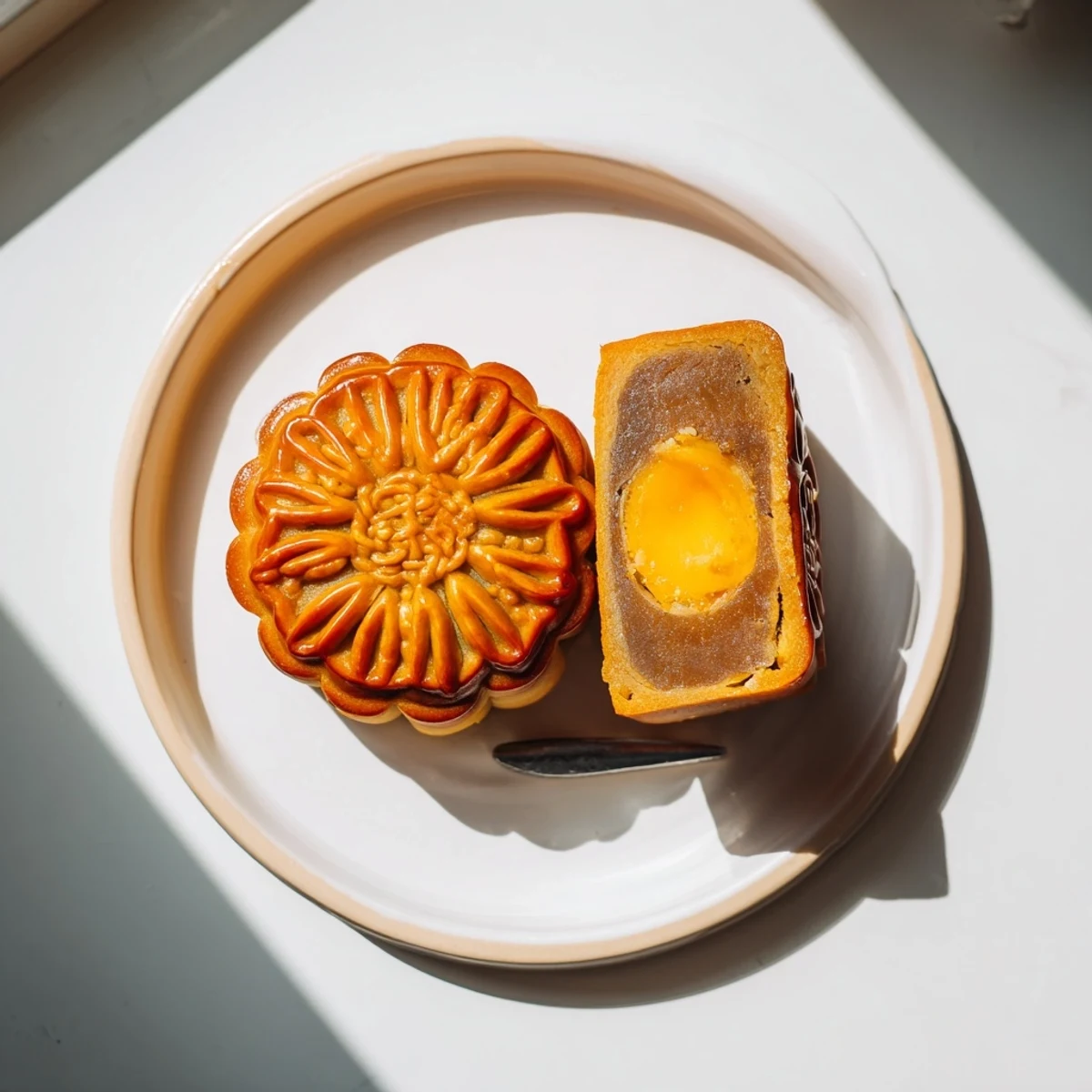
Save These authentic mooncakes feature a tender, golden-brown pastry shell encasing rich lotus seed paste with a savory salted egg yolk center. The dough, made with golden syrup and alkaline water, develops that signature glossy finish and soft texture after resting. Shaped in traditional molds, these pastries bake to a beautiful sheen when glazed with egg wash. Allow them to rest for a day before serving—the skin softens beautifully while the filling becomes moist and fragrant. Perfect alongside Chinese tea during autumn celebrations.
There is something so satisfying about pressing dough into a carved mold and watching those intricate patterns emerge. I still remember my first attempt at mooncakes, working way too late into the night with flour dusted everywhere. The golden syrup gives the dough this gorgeous amber color, and the whole process feels like making edible art. My kitchen smelled like toasted lotus seeds for days afterward.
Last autumn, I made a batch for my neighbor who had never tried homemade mooncakes before. She took one bite and immediately asked if I could teach her the wrapping technique. We spent the next afternoon in my kitchen, flour on our noses, laughing at our misshapen attempts. Now it is our annual tradition to make them together while the autumn breeze drifts through the window.
Ingredients
- 200 g all-purpose flour: Regular flour works perfectly here, no need to hunt down specialty types
- 120 g golden syrup: This traditional ingredient gives the dough its characteristic color and that tender, slightly chewy texture
- 50 g vegetable oil: A neutral oil lets the syrup shine without competing flavors
- 1 tsp alkaline water: Also called lye water, this is what gives mooncake skin that distinct springy texture and helps the browning
- 500 g lotus seed paste: Smooth and naturally sweet, though red bean paste makes a wonderful substitute
- 12 salted egg yolks: These create that beautiful golden center and add a rich, savory contrast to the sweet filling
- 1 egg yolk and 1 tbsp water: Whisked together for that gorgeous glossy finish on top
Instructions
- Prepare your space:
- Preheat your oven to 180°C (350°F) and line a baking tray with parchment paper before you start mixing anything.
- Mix the wet ingredients:
- Whisk together the golden syrup, vegetable oil, and alkaline water until completely smooth and emulsified.
- Form the dough:
- Add the flour to the wet mixture and stir gently until a soft dough forms, then cover and let it rest for 30 minutes so the gluten relaxes.
- Prepare the filling:
- Divide the lotus seed paste into 12 equal portions, and if using salted egg yolks, tuck one inside each paste ball and reshape.
- Portion the dough:
- After resting, divide the dough into 12 equal pieces, keeping them covered so they do not dry out while you work.
- Wrap the filling:
- Flatten a dough piece into a disc, place a filling ball in the center, and gently wrap the dough around it, pinching to seal completely.
- Shape the mooncakes:
- Dust each ball lightly with flour, place it in a floured mooncake mold, and press firmly but gently before inverting to release.
- Initial bake:
- Bake for 5 minutes just to set the shape, then remove and let cool for 10 minutes before glazing.
- Apply the glaze:
- Whisk the egg yolk with water and brush a thin, even layer over the cooled mooncakes.
- Finish baking:
- Return to the oven for 15 to 20 minutes more until they are a beautiful golden brown.
- Rest and serve:
- Cool completely and store in an airtight container for 1 to 2 days, letting the skin soften before serving.
 Save
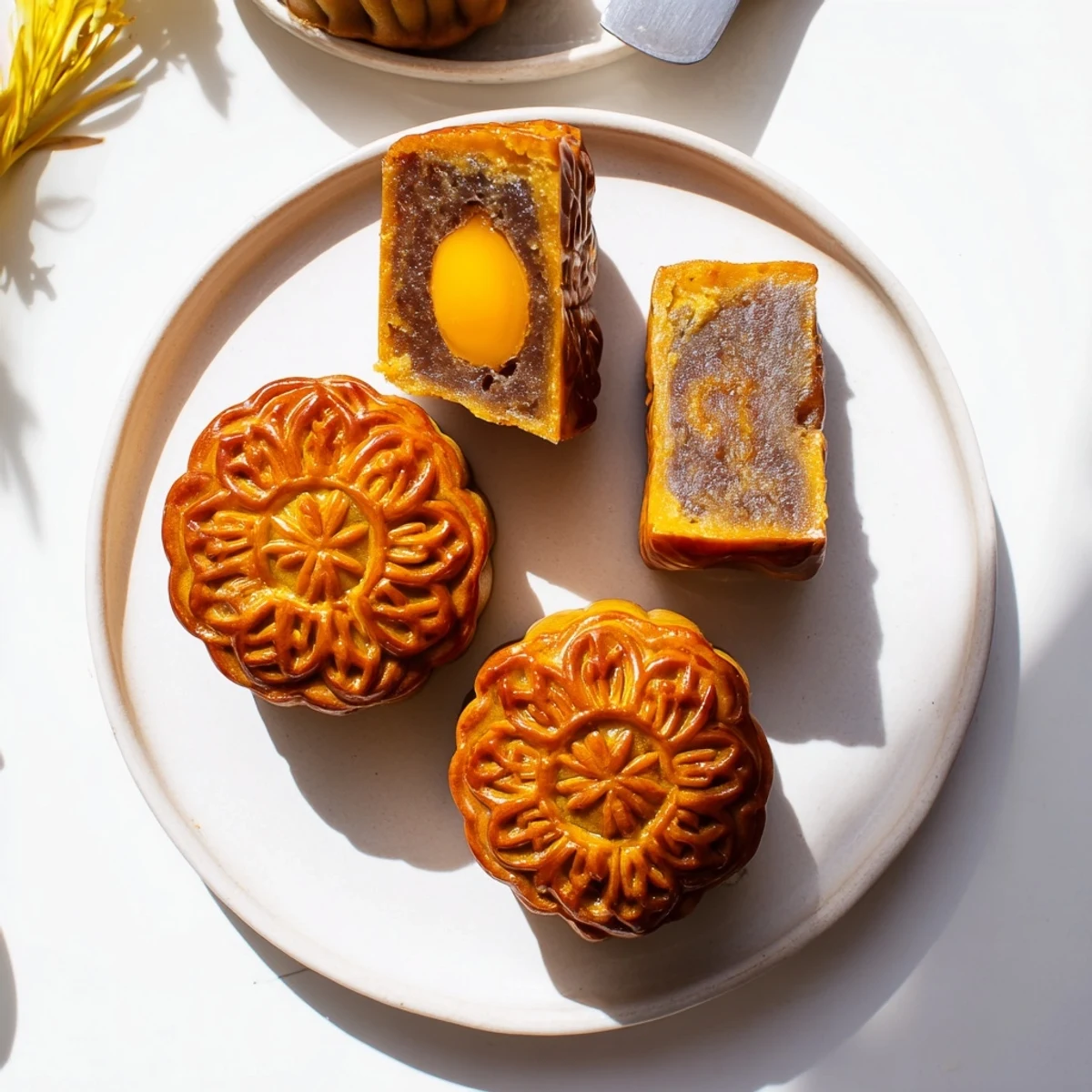
Save My grandmother always said mooncakes taste best when shared with people who understand the patience that goes into making them. Now whenever I see those intricate patterns on the pastry, I think of all the hands that have passed this technique down through generations.
Choosing Your Filling
While lotus seed paste is traditional, I have found that red bean paste works just as beautifully and is sometimes easier to find. Black sesame paste adds this wonderful nutty depth that surprises people who have only ever had the classic version.
Working with the Mold
Dust your mold generously with flour between each mooncake, or they will stick and you will lose those beautiful patterns. I keep a small bowl of flour right next to my work area just for this purpose.
Serving and Storing
Mooncakes really do need those 1 to 2 days of resting to achieve the proper texture. The pastry softens and the flavors meld together into something completely different from the fresh-baked version.
- Slice thinly and serve with hot Chinese tea to cut through the richness
- These freeze beautifully for up to a month if you want to make them ahead
- Bring to room temperature before serving for the best texture and flavor
 Save
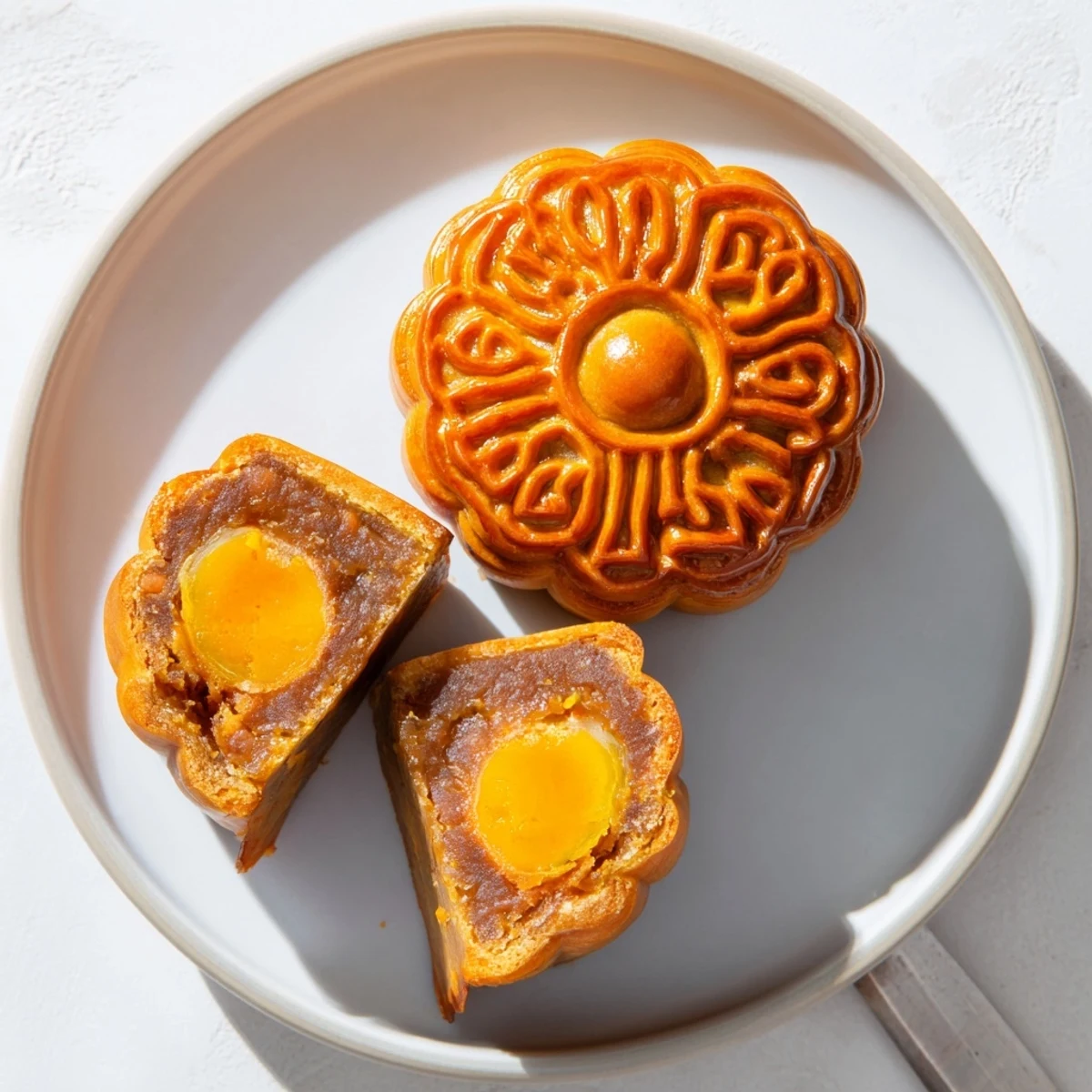
Save There is something magical about cutting into a mooncake you made yourself and seeing that perfect layer of pastry and filling. Every bite feels like a celebration of tradition and the joy of making something by hand.
Recipe FAQs
- → What is the purpose of alkaline water in mooncake dough?
-
Alkaline water helps create that signature golden color and tender texture. It neutralizes acidity in the syrup, promotes browning during baking, and contributes to the glossy finish traditional mooncakes are known for.
- → Why must mooncakes rest before serving?
-
Resting allows the oil in the dough to redistribute evenly, softening the pastry skin. This essential step transforms the texture from crisp to tender, creating that characteristic melt-in-your-mouth quality of authentic mooncakes.
- → Can I make mooncakes without a traditional mold?
-
While traditional molds create the classic intricate designs, you can shape them by hand or use a small tart press. The appearance will differ, but the taste and texture remain delicious. Press designs with a fork or decorative stamp as an alternative.
- → What fillings work best for homemade mooncakes?
-
Lotus seed paste offers the most traditional flavor profile. Red bean paste provides a slightly earthier sweetness, while black sesame adds nutty depth. Each filling pairs beautifully with the rich salted egg yolk center.
- → How should I store fresh mooncakes?
-
Keep in an airtight container at room temperature for up to one week. The flavors deepen and the skin softens during this time. For longer storage, refrigerate for 2-3 weeks, though the skin may become slightly firmer.
- → Why are mooncakes associated with the Mid-Autumn Festival?
-
Mooncakes symbolize family unity and completeness, mirroring the full harvest moon. Sharing these round pastries while admiring the moon has been a cherished tradition for centuries, representing reunion and prosperity.