
 Save
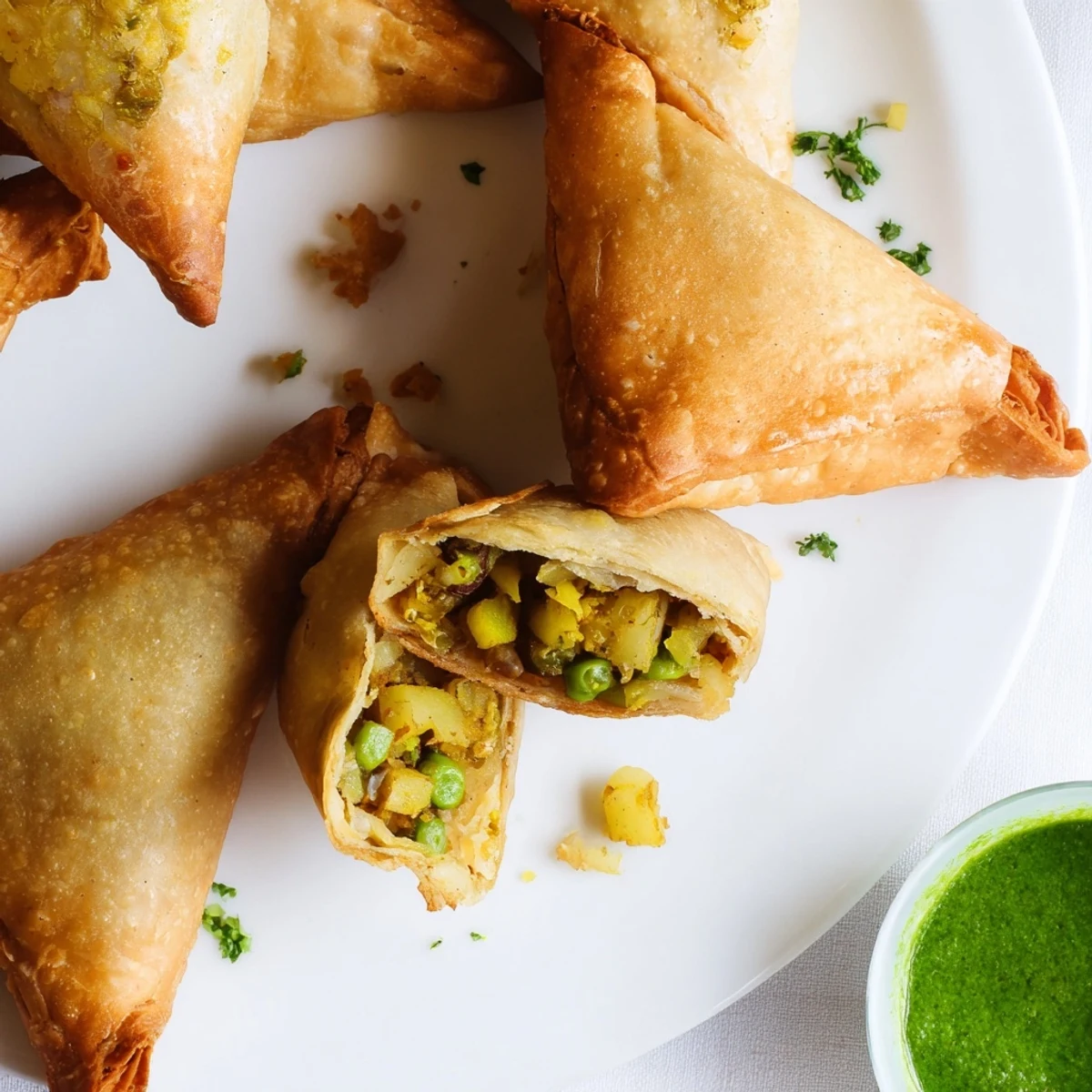
Save These hand-held pastry pockets feature a tender, flaky crust enclosing a savory filling of mashed potatoes and green peas. The filling gets its authentic flavor from ginger, garlic, and a blend of cumin, coriander, garam masala, and turmeric. Fresh cilantro and lemon juice brighten the mixture, while the dough achieves its perfect texture through a careful balance of flour and oil.
Deep frying creates the signature golden exterior with satisfying crunch, though baking offers a lighter alternative. The process involves making the dough, preparing the aromatic filling, shaping into triangular cones, and frying until crisp. Serve with mint chutney or tamarind sauce for the complete experience.
The rain was coming down in sheets when my aunt pulled me into her kitchen in Mumbai, showing me how to fold those perfect little triangles. My first attempt looked more like a crushed envelope than a samosa, but she just laughed and handed me another piece of dough, saying practice makes pastry perfect. That afternoon spent standing over the stove, watching them turn golden in the hot oil, changed everything I thought about homemade snacks. Now whenever I smell cumin hitting hot oil, I am right back in that cozy kitchen, rain pattering against the windows.
Last Diwali, I made three dozen of these for my apartment building gathering. One neighbor who had lived in Mumbai for years took one bite and immediately asked for the recipe, saying it tasted exactly like the street food she missed every morning. By the time I went back to the kitchen, the entire platter was empty and people were actually scavenging for crumbs.
Ingredients
- 2 cups all-purpose flour: The foundation of that perfectly flaky crust we are aiming for, bread flour makes it too tough so stick with all-purpose
- 1/4 cup vegetable oil: Rubbed into the flour this creates those tender layers that shatter beautifully when you bite into the finished samosa
- 1/2 teaspoon salt: Just enough to enhance flavor without competing with the spiced filling
- 1/2 cup water: Add gradually because humidity affects how much your dough needs, you want it firm but not dry
- 2 medium potatoes: Russet or Yukon Gold work beautifully here, we will boil then lightly mash for the perfect filling texture
- 1/2 cup green peas: Frozen work perfectly fine here, they add sweet pops of freshness against the spiced potatoes
- 1 small onion: Finely chopped so it melts into the filling rather than leaving identifiable chunks
- 2 tablespoons vegetable oil: For sautéing our aromatics, this builds the flavor foundation of the filling
- 2 teaspoons ginger, grated: Fresh is non-negotiable here, the zing it provides is worth the extra prep time
- 2 cloves garlic, minced: Mashed into a paste with the ginger for even distribution throughout the filling
- 1 green chili, finely chopped: Adjust based on your heat tolerance, but keep some for that authentic kick
- 1 teaspoon ground cumin: Earthy and essential, this is what makes samosas taste like samosas
- 1 teaspoon ground coriander: Adds citrusy brightness that balances the warming spices perfectly
- 1/2 teaspoon garam masala: The finishing spice blend that adds depth and complexity
- 1/2 teaspoon turmeric powder: Mostly for that gorgeous golden color, though it adds subtle earthiness too
- 1/2 teaspoon chili powder: For background warmth and that beautiful reddish hue
- Salt, to taste: Remember the filling needs to be well-seasoned since it is wrapped in bland pastry
- 2 tablespoons fresh cilantro, chopped: The finishing touch that adds fresh herbal brightness to the rich filling
- 1 tablespoon lemon juice: A squeeze of acid that wakes up all the spices and prevents the filling from feeling heavy
- Vegetable oil for deep frying: Neutral oil with a high smoke point is essential here, canola or peanut work beautifully
Instructions
- Mix the Perfect Dough:
- Combine flour and salt in a large mixing bowl, then add the oil and work it in with your fingertips until the mixture looks like coarse breadcrumbs. Gradually add water while kneading until you have a firm, smooth dough that does not stick to your hands.
- Let It Rest:
- Cover the dough and set it aside for at least 30 minutes, which gives the gluten time to relax and makes rolling much easier later.
- Start the Filling Base:
- Boil your diced potatoes until tender but not falling apart, about 10 minutes, then drain them well. Heat oil in a skillet over medium heat and add onion, ginger, garlic, and green chili, cooking until the onion turns soft and translucent.
- Bloom the Spices:
- Add cumin, coriander, garam masala, turmeric, and chili powder to the skillet and stir for about 1 minute until incredibly fragrant.
- Combine Everything:
- Stir in the potatoes and peas, seasoning generously with salt, and cook for 3 to 4 minutes while lightly mashing some of the potatoes against the side of the pan.
- Finish the Filling:
- Remove from heat and stir in the fresh cilantro and lemon juice, then let the filling cool completely since hot filling will make your pastry soggy.
- Portion the Dough:
- Divide the rested dough into 6 equal balls and keep them covered so they do not dry out while you work.
- Roll and Cut:
- Roll each ball into a 6-inch circle, then cut it in half to form two semi-circles from each ball.
- Form the Cone:
- Brush the straight edge of a semi-circle with water, then bring the edges together to form a cone shape and press firmly to seal.
- Fill and Seal:
- Fill each cone with about 2 tablespoons of the cooled filling, then brush the open edge with water and press to seal, forming a triangle.
- Heat the Oil:
- Heat oil in a deep pan until it reaches 350°F, which is hot enough that a small piece of dough sizzles immediately but does not brown instantly.
- Fry to Perfection:
- Cook samosas in batches of 3 or 4 for about 5 to 6 minutes, turning occasionally until they are deep golden brown and sound hollow when tapped.
- Drain and Serve:
- Remove with a slotted spoon and drain on paper towels, then serve immediately while still hot and impossibly crispy.
 Save
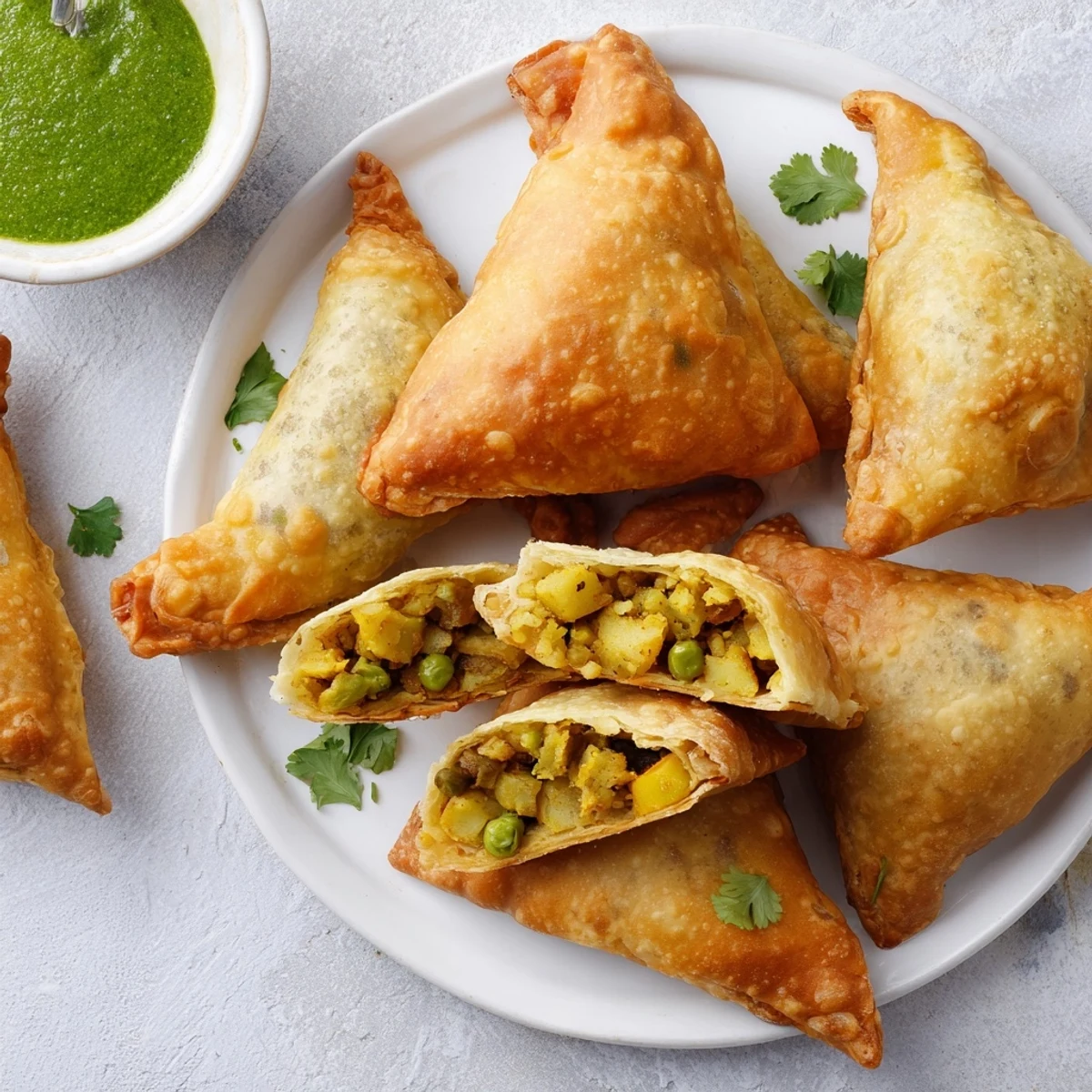
Save My younger sister used to beg me to make these for her birthday instead of cake. There is something so special about food you can hold in your hand and eat while talking, the spices lingering on your fingers long after the last bite.
Making the Folding Technique Your Own
The cone shape can feel intimidating at first, but after making six or seven, your hands develop a rhythm that cannot be taught from words alone. I have found that slightly dampening my fingers helps create that perfect seal, and working quickly keeps the dough from drying out and cracking at the edges.
Understanding Your Oil Temperature
The secret to restaurant-quality samosas is maintaining that perfect oil temperature. I keep a kitchen thermometer nearby because once I tried guessing and ended up with burnt outsides and raw insides. The oil should be active but not violent, and the samosas should sizzle happily without being overwhelmed by bubbles.
Serving Suggestions That Wow
While samosas are incredible on their own, the right accompaniments transform them into a complete experience. I always serve them with both mint chutney and tamarind date sauce because the cool herb notes and sweet tangy flavors complement the spiced filling beautifully. Some people love them with hot chai, creating that perfect contrast between cool drink and hot, crispy pastry.
- Make extra samosas because they disappear faster than you expect when served hot
- Set up a DIY toppings bar with chutneys, chaat masala, and chopped onions for interactive serving
- Reheat leftover samosas in a 350°F oven for 10 minutes rather than the microwave to maintain crispness
 Save
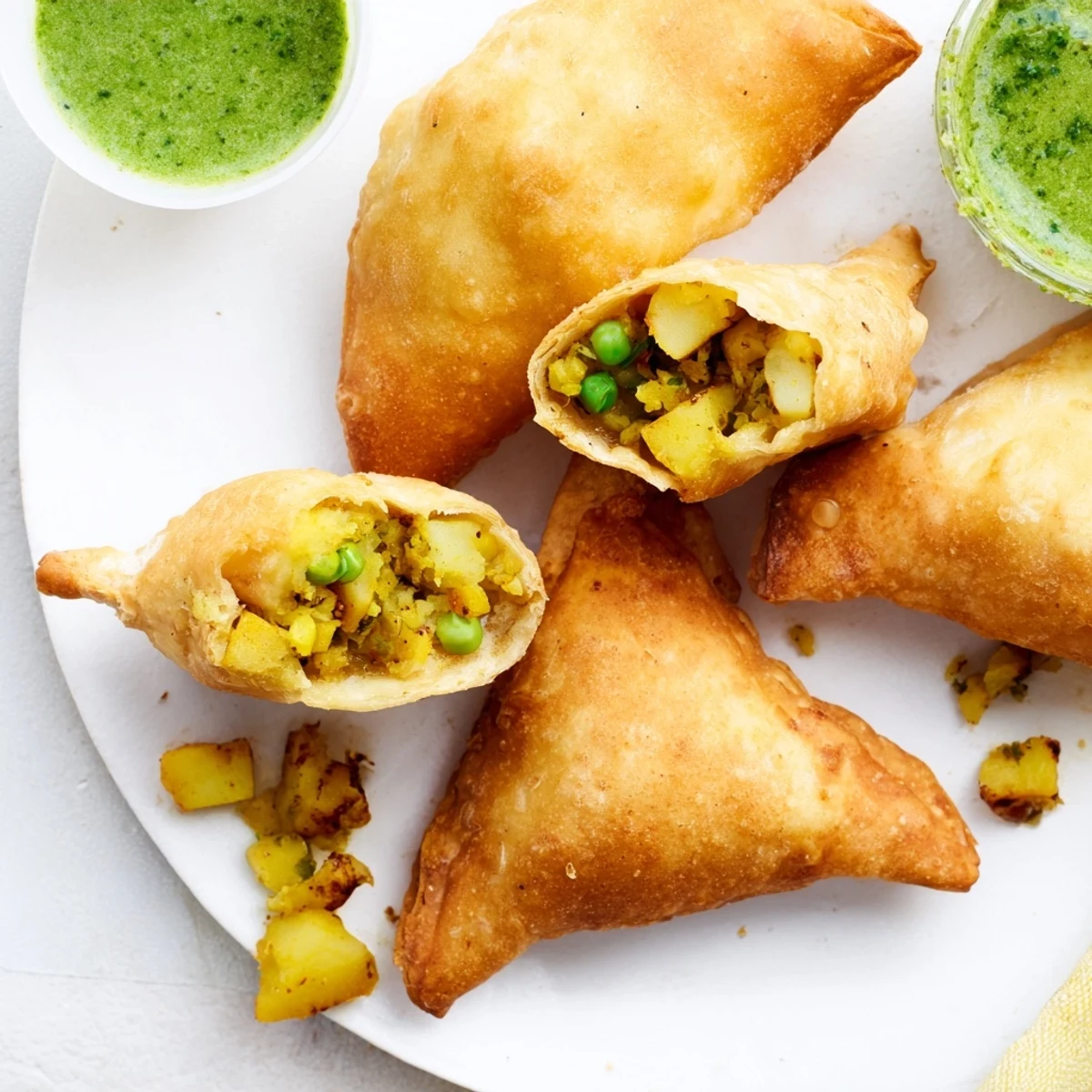
Save There is nothing quite like breaking through that hot, crispy shell into the fragrant, spiced interior. Make these once and they will become your go-to comfort food for rainy days, celebrations, and every craving in between.
Recipe FAQs
- → What makes the pastry crispy and flaky?
-
The combination of flour and vegetable oil creates a tender dough that fries up crisp. Rubbing the oil into the flour until it resembles coarse crumbs ensures proper fat distribution, resulting in flaky layers when deep fried at the right temperature.
- → Can I bake instead of deep frying?
-
Yes, bake at 400°F (200°C) for 25–30 minutes, brushing with oil halfway through. The texture will be slightly less crispy but still delicious. This method reduces overall fat content while maintaining great flavor.
- → How do I prevent samosas from bursting during frying?
-
Ensure the filling cools completely before shaping. Seal edges thoroughly with water and press firmly. Don't overfill—2 tablespoons per samosa is ideal. Fry at 350°F so the pastry cooks and sets before the filling expands.
- → Can I freeze uncooked samosas?
-
Absolutely. Arrange shaped samosas on a baking sheet and freeze until solid, then transfer to an airtight container. Fry directly from frozen, adding 1–2 minutes to cooking time. No need to thaw first.
- → What dipping sauces work best?
-
Mint chutney offers a fresh, cooling contrast to the spices. Tamarind sauce provides sweet-tart notes that complement the filling. You can also serve with plain yogurt or mango chutney for varied flavor profiles.
- → How long do cooked samosas stay crispy?
-
Best enjoyed immediately while hot and crisp. To reheat, place in a 350°F oven for 5–7 minutes. Avoid microwaving as it makes the pastry soggy. Properly stored, they keep 2–3 days refrigerated.